
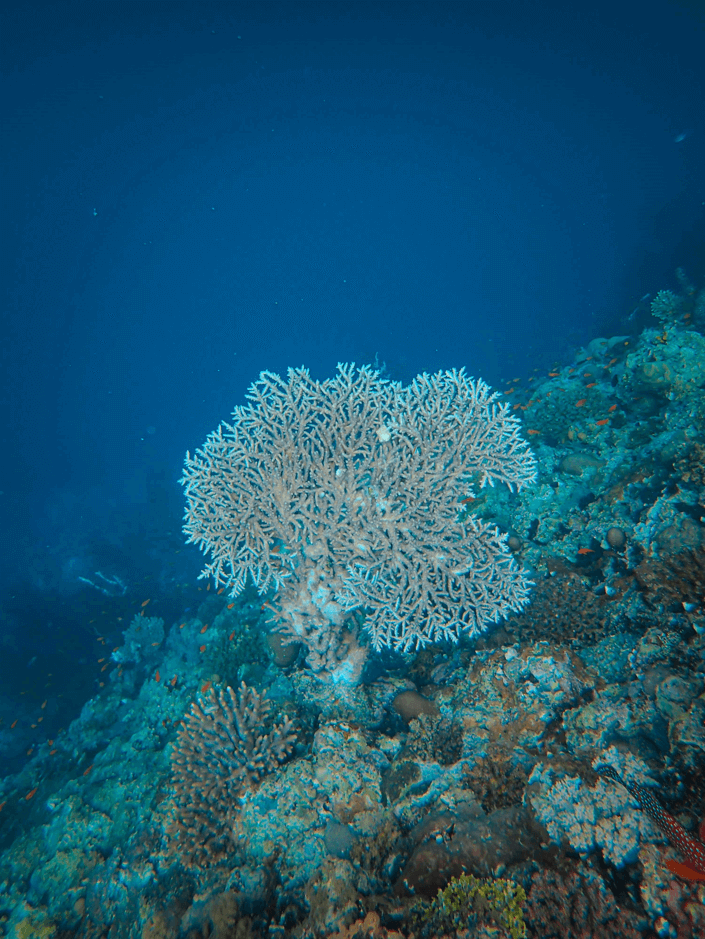
Two foundational coral species in Florida — Staghorn (Acropora cervicornis) and Elkhorn (Acropora palmata) — have been declared functionally extinct following an extreme marine heatwave that affected the Florida Keys in 2023.
A multi-institutional study surveying more than 50,000 coral colonies across nearly 400 reef sites found mortality rates ranging from 97.8% to 100% in some of the hardest-hit zones. Researchers confirmed that the populations of both species are now too low to reproduce or sustain reef growth naturally.
Staghorn and Elkhorn corals once formed the structural foundation of the Florida Reef Tract and much of the Caribbean reef network. Their loss marks a critical ecological shift: these species provided habitat for a wide range of fish and marine organisms, supported local fisheries, and protected coastal communities from storm surges and erosion.
With their near-total collapse, Florida’s reef system — the third-largest barrier reef in the world — is experiencing widespread habitat degradation, threatening biodiversity and local economic stability.
In July 2023, sea surface temperatures in parts of the Florida Keys exceeded 38°C (100°F), setting new historical records. According to researchers, heat stress levels were recorded at 2.2 to 4 times higher than previous years, creating conditions incompatible with coral survival.
Prolonged exposure to extreme heat caused severe bleaching, a process where corals expel the algae that provide them with energy and color. Many colonies failed to recover even after temperatures dropped, leading to permanent mortality across entire reef zones.
Marine research institutions and local organizations are conducting large-scale restoration efforts aimed at preserving surviving coral fragments and promoting genetic resilience. Techniques include:
Scientists caution that while these methods may slow ecosystem decline, long-term recovery depends on stabilizing ocean temperatures and reducing global greenhouse gas emissions.
Florida’s reef tract is now considered one of the most severely affected coral systems in the Western Atlantic. Experts note that while individual corals may still exist, their populations have dropped below the threshold necessary to sustain ecological function — a status defined as “functionally extinct.”
Future projections indicate that without sustained mitigation and rapid adaptation efforts, recurring marine heatwaves will continue to threaten the remaining coral ecosystems across the region.
From breaking news to thought-provoking opinion pieces, our newsletter keeps you informed & engaged.





Lorem ipsum dolor sit amet, consectetur adipiscing elit. Suspendisse varius enim in eros elementum tristique. Duis cursus, mi quis viverra ornare, eros dolor interdum nulla, ut commodo diam libero vitae erat. Aenean faucibus nibh et justo cursus id rutrum lorem imperdiet. Nunc ut sem vitae risus tristique posuere.