
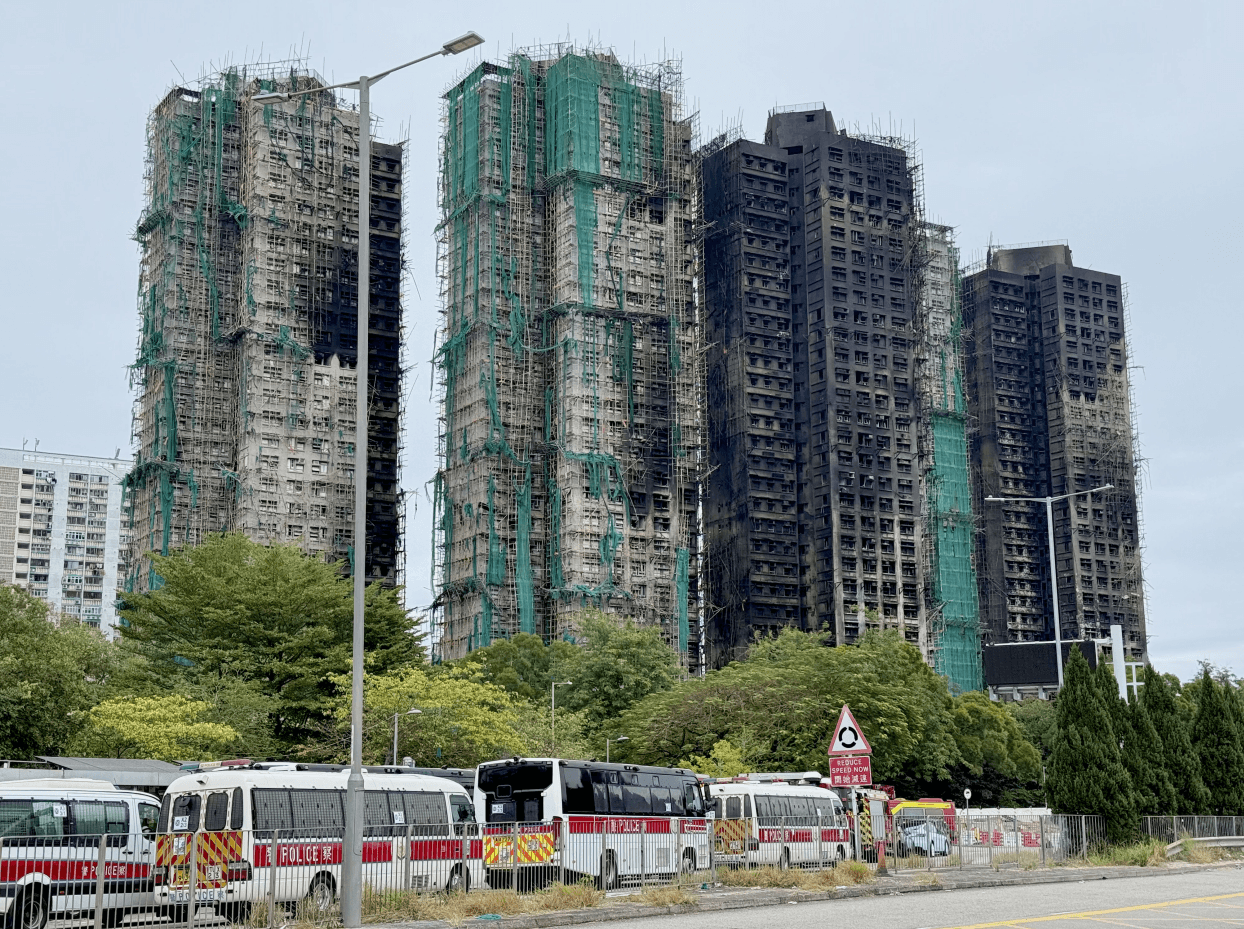
HONG KONG — Formal hearings are set to begin into the fatal Wang Fuk Court fire that killed 168 people, as authorities move to determine how a single ignition developed into one of the deadliest residential disasters in Hong Kong’s history.
The blaze, which broke out at the Wang Fuk residential complex in Tai Po, spread rapidly across multiple high-rise towers and burned for an extended period before being brought under control. The scale of the incident has prompted a wide-ranging investigation into fire safety standards, building conditions, and emergency response systems in densely populated residential developments.
Preliminary findings indicate the fire likely originated at the lower exterior levels of a building undergoing renovation. Investigators are examining the role of combustible construction materials, including protective netting and insulation boards commonly used in façade works.
Authorities have also pointed to a possible human cause, with evidence suggesting that improperly discarded smoking materials may have ignited flammable components within the scaffolding structure. The exact ignition source remains under investigation and is expected to be a central focus of the hearings.
What began as a localized fire escalated rapidly due to the building’s external renovation setup. Bamboo scaffolding enveloping the structure, combined with combustible mesh and sheeting, created a vertical pathway that allowed flames to travel quickly between floors.
Fire experts have noted that this configuration can produce a “chimney effect,” intensifying heat and accelerating upward fire movement. The presence of additional flammable materials along the building façade is also believed to have contributed to the speed and scale of the spread.
Within a short period, the fire extended beyond the initial structure, affecting multiple towers within the complex.
Investigators are increasingly treating the disaster as the result of overlapping and compounding failures, rather than a single point of origin.
Initial evidence suggests a chain of contributing factors: a probable ignition linked to human activity, the presence of highly combustible renovation materials, and structural conditions that enabled rapid vertical and lateral fire spread. Each element alone posed a risk; together, they created conditions in which containment became significantly more difficult.
Compounding these factors were apparent shortcomings in fire safety systems. Early reports indicate that some alarms did not activate as expected, while certain hydrants and suppression systems may not have functioned effectively. There are also concerns that escape routes were compromised or insufficient under the circumstances.
The timing of renovation work has emerged as a critical dimension. Temporary installations such as scaffolding and netting, while standard in maintenance projects, may have unintentionally facilitated the spread of fire across multiple floors and buildings.
The hearings are expected to examine how these overlapping vulnerabilities—human, structural, and systemic—interacted during the incident, and whether the scale of the disaster could have been mitigated.
Emergency services responded to the blaze as it escalated, with firefighting operations continuing for an extended duration due to the intensity and spread of the fire. Authorities are expected to review response timelines, coordination efforts, and operational challenges faced during the incident.
The inquiry will include testimony from survivors, first responders, building management, and safety experts. Officials are also expected to assess compliance with existing fire safety regulations and whether enforcement mechanisms were adequate.
The Wang Fuk fire has intensified scrutiny of older residential buildings and those undergoing renovation in Hong Kong, particularly in relation to fire risk management and regulatory oversight.
Authorities have signaled that findings from the hearings may inform future policy decisions, including potential updates to fire safety requirements, inspection protocols, and construction practices.
For families of the victims, the hearings represent a critical step toward establishing accountability and understanding how the disaster unfolded. For the city, the outcome may shape how safety is managed in its high-density, high-rise living environment in the years ahead.
From breaking news to thought-provoking opinion pieces, our newsletter keeps you informed & engaged.





Lorem ipsum dolor sit amet, consectetur adipiscing elit. Suspendisse varius enim in eros elementum tristique. Duis cursus, mi quis viverra ornare, eros dolor interdum nulla, ut commodo diam libero vitae erat. Aenean faucibus nibh et justo cursus id rutrum lorem imperdiet. Nunc ut sem vitae risus tristique posuere.