
The International Olympic Committee (IOC) has formally introduced a new gender eligibility framework that will restrict participation in women’s Olympic events to athletes classified as biologically female, marking one of the most significant policy shifts in modern Olympic history.
The decision, confirmed in March 2026 following months of consultation and scientific review, establishes a standardized rule across all Olympic sports—replacing the previous system in which individual international federations determined their own eligibility criteria.
Under the new policy, transgender women will no longer be permitted to compete in female Olympic categories. The framework also introduces stricter conditions for athletes with differences of sex development (DSD), a group that has been at the center of ongoing eligibility debates in elite sport.
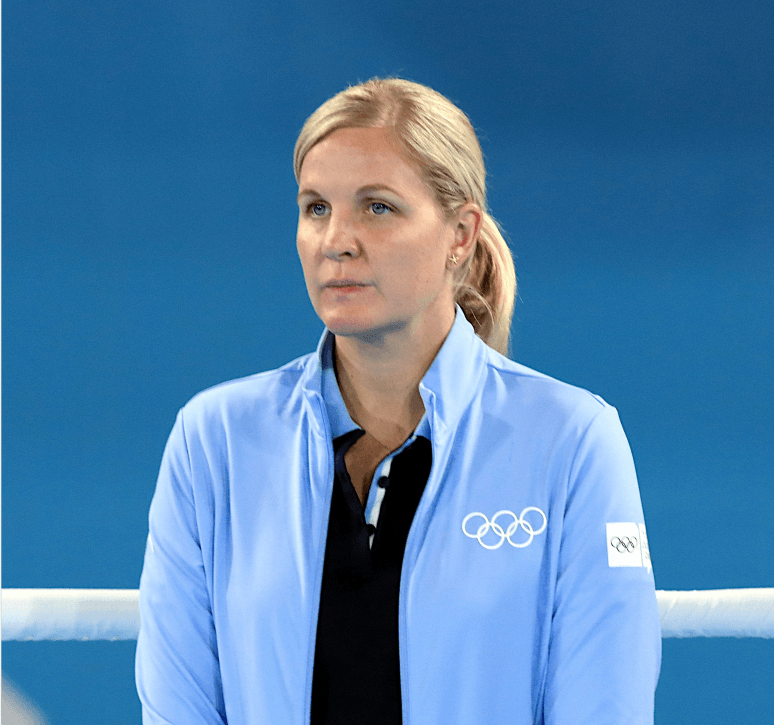
IOC President Kirsty Coventry stated that the policy is grounded in scientific evidence and aims to preserve competitive balance. She emphasized that even marginal physiological advantages can determine outcomes at the Olympic level, reinforcing the organization’s position that the female category requires clear protection.
The updated rules are expected to take effect ahead of the 2028 Los Angeles Olympic Games, providing a unified global standard for athlete eligibility. Previously, the IOC had avoided imposing a universal rule, instead delegating responsibility to individual sports federations—a system that resulted in widely varying regulations across disciplines.
The policy shift follows the IOC’s establishment of a “protection of the female category” working group in 2025, tasked with evaluating scientific data and regulatory approaches amid increasing global scrutiny over fairness in women’s sport.
In recent years, several international federations had already moved toward stricter eligibility requirements. Sports such as athletics and rugby introduced bans on athletes who had undergone male puberty, while others implemented age-based or hormone-related criteria.
The IOC’s move consolidates these fragmented approaches into a single framework, reflecting a broader shift toward consistency across Olympic competition. However, the decision is expected to remain a focal point of international debate, as governing bodies, athletes, and advocacy groups continue to weigh issues of inclusion, fairness, and human rights in elite sport.
From breaking news to thought-provoking opinion pieces, our newsletter keeps you informed & engaged.






Lorem ipsum dolor sit amet, consectetur adipiscing elit. Suspendisse varius enim in eros elementum tristique. Duis cursus, mi quis viverra ornare, eros dolor interdum nulla, ut commodo diam libero vitae erat. Aenean faucibus nibh et justo cursus id rutrum lorem imperdiet. Nunc ut sem vitae risus tristique posuere.