
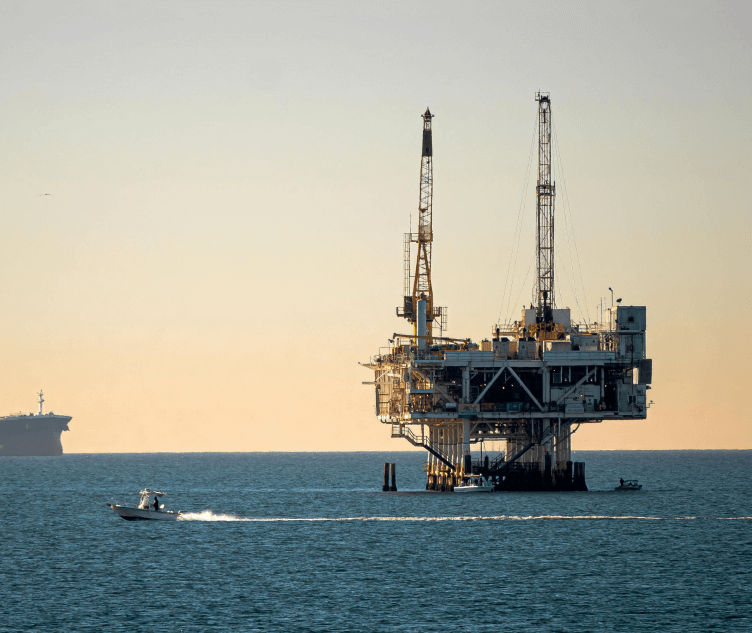
Oil futures climbed sharply and key global stock indices weakened on Monday as the conflict involving Iran, the United States and Israel intensified, raising concerns about potential disruptions to energy supply chains and the broader global economy. Brent crude, the international benchmark, rose substantially in early trading while U.S. and European equity markets registered declines, reflecting elevated risk perceptions among investors.
The immediate market response followed weekend military actions that marked a significant escalation in hostilities between the United States, its regional allies and the Iranian military. The Strait of Hormuz, through which roughly one fifth of the world’s crude oil supply transits, has seen a sharp reduction in vessel movements amid safety warnings and actual attacks on tankers, intensifying fears of broader supply constraints.
Brent crude futures reached levels not seen in over a year, trading above $80 per barrel in London, after an initial intraday surge of around ten per cent. U.S. West Texas Intermediate benchmarks also posted significant gains, with prices rising more than eight per cent in reaction to heightened geopolitical risk and restricted tanker activity in the Gulf region.
Analysts note that the price increase reflects both direct threats to Iranian and regional export capacity and the possibility of extended disruptions to maritime oil flows. While market supply fundamentals had been relatively balanced earlier in the year, the precarious security outlook around key Gulf shipping routes has introduced a sizeable risk premium into crude valuations.
In addition to crude, related commodity markets exhibited risk-driven behaviour. Gold prices rose as investors sought safe-haven assets in the face of unexpected volatility, and war-risk insurance premiums for tankers and cargoes increased sharply.
Stock markets in Europe and Asia opened lower on Monday with benchmark indexes including the FTSE 100 and Germany’s DAX down by measurable margins. Technology and travel sectors underperformed, while oil majors and defence-related equities saw relative strength amid the shift in investor sentiment.
In the United States, futures on the S&P 500 and Nasdaq 100 indicated downward pressure ahead of the opening bell, following losses in Asian markets and weak European performance. Market volatility gauges, such as the VIX, remained elevated compared with recent historical averages, signalling sustained uncertainty among traders.
Equities tied to sectors directly exposed to oil price movements and geopolitical risk, such as airlines and shipping, experienced notable sell-offs as heightened fuel costs and transport disruptions weighed on expected near-term earnings.
The current conflict traces its roots to the breakdown of diplomatic engagement between Tehran and Western governments over nuclear and regional security issues. Recent military actions have inflicted damage on infrastructure and accelerated retaliatory operations, further destabilising a region already central to global energy supplies.
The Strait of Hormuz remains at the centre of the disruption. Located between Iran and Oman, it serves as the principal maritime conduit for crude oil and liquefied natural gas exports from the Persian Gulf. Historical data show that approximately 18 to 20 million barrels of oil per day passed through the strait prior to the current crisis, highlighting its critical role in global energy logistics.
Responses from national producers and international bodies have been mixed. OPEC+ has agreed to modest increases in production quotas to offset potential shortfalls, while the International Energy Agency continues consultations with member states on strategic reserve utilisation. However, these adjustments may not fully mitigate the impact of physical or operational bottlenecks at key transit points.
Rising crude prices carry implications for inflationary pressures in oil-importing economies, where higher fuel costs can translate into increased transportation and production expenses across diverse sectors. Central banks and fiscal authorities will monitor these developments closely as they assess monetary policy settings and economic forecasts.
Higher energy costs may influence consumer behaviour and business investment decisions, particularly if price increases persist or broaden into refined product markets. Emerging market currencies and bond markets could experience additional stress, depending on the duration and extent of sustained oil price elevation.
Financial regulators and international organisations will track the potential for spillovers into credit markets and cross-border investment flows, especially if volatility in equity and commodity markets endures. Supply chain disruptions linked to maritime route safety could further complicate trade patterns beyond energy alone.
Market participants will be closely watching scheduled trading sessions in New York and Asia for further price discovery, particularly in energy and equity markets. Official statements from governments and multilateral organisations on conflict de-escalation, shipping safety protocols and emergency production coordination are expected to influence sentiment and risk assessments in the coming days.
Policy announcements regarding strategic petroleum reserve releases or coordinated fiscal responses could also shape market dynamics as authorities seek to balance energy security with broader economic stability.
The combination of military escalation in the Middle East and the strategic significance of the Strait of Hormuz has led to immediate upward pressure on global oil prices and simultaneous declines in major stock markets. These movements reflect heightened risk aversion and concerns over potential supply chain interruptions. As geopolitical and economic developments continue to unfold, markets are poised for further volatility, with participants and policymakers alike monitoring key indicators for signs of stabilisation.
From breaking news to thought-provoking opinion pieces, our newsletter keeps you informed & engaged.





Lorem ipsum dolor sit amet, consectetur adipiscing elit. Suspendisse varius enim in eros elementum tristique. Duis cursus, mi quis viverra ornare, eros dolor interdum nulla, ut commodo diam libero vitae erat. Aenean faucibus nibh et justo cursus id rutrum lorem imperdiet. Nunc ut sem vitae risus tristique posuere.