
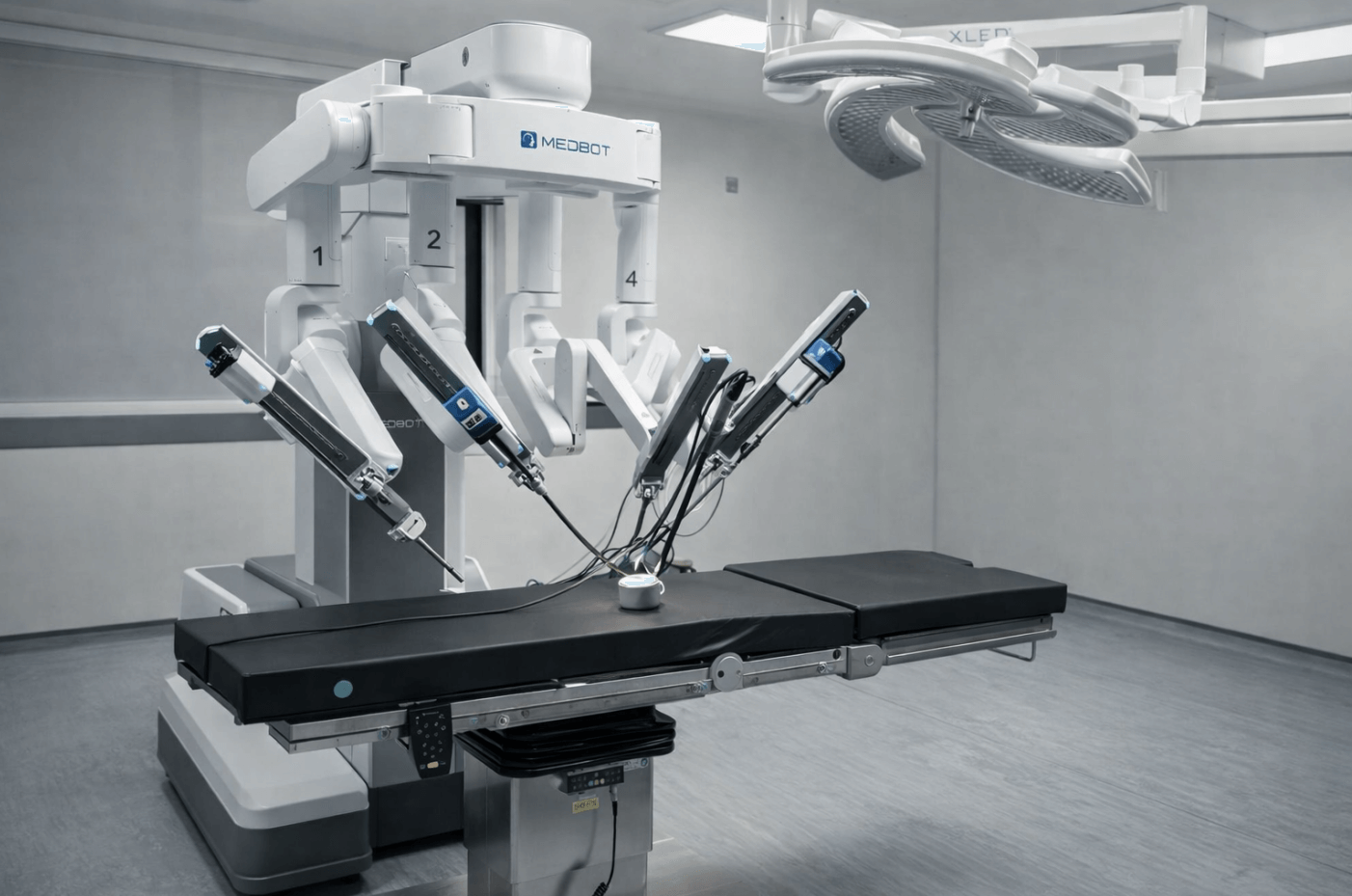
A surgeon in London has successfully performed robotic prostate cancer surgery on a patient located 2,400 kilometres away in Gibraltar, marking a milestone in the United Kingdom’s advancement in remote medical procedures.
The pioneering operation involved 62-year-old patient Paul Buxton, a British resident of Gibraltar who underwent a prostatectomy, the surgical removal of the prostate, at St Bernard’s Hospital, the territory’s only hospital. The procedure was conducted remotely by Professor Prokar Dasgupta, a leading robotic urological surgeon based at The London Clinic in London.
Using the Toumai Robotic System developed by Microport, Professor Dasgupta controlled a four-armed surgical robot equipped with a high-definition three-dimensional camera. The system was operated through a specialised console in London, allowing the surgeon to guide the robot in Gibraltar in real time.
According to the surgical team, the connection between the two locations operated with a delay of only 0.06 seconds, enabling precise control during the complex procedure. The system was linked through fibre-optic technology with a backup 5G connection to ensure continuity throughout the operation.
Medical staff at St Bernard’s Hospital remained present in the operating theatre as a precaution in case the connection was interrupted, although the procedure proceeded without technical issues.
Buxton, originally from Burnham-on-Sea in Somerset, moved to Gibraltar around four decades ago. After receiving a prostate cancer diagnosis shortly after Christmas, he initially expected to travel to England for treatment and join the National Health Service waiting list.
Instead, he was offered the opportunity to participate in the remote surgery initiative. Speaking after the procedure, Buxton said he felt “fantastic” just days later and described the experience as a privilege.
The operation represents the first known case of a robotic surgical procedure carried out remotely from the United Kingdom to another location at such a distance. Medical teams involved in the project described the achievement as a significant step in the development of telesurgery.
The initiative was the result of collaboration between The London Clinic and the Gibraltar Health Authority, with global technology services provider Presidio supporting the network infrastructure required for the procedure.
Professor Dasgupta, who leads The London Clinic’s Robotic Centre of Excellence, said the surgery demonstrated how modern communication technology could expand access to specialised care. Patients in smaller or remote communities often need to travel long distances for advanced procedures, a process that can involve substantial costs and disruption.
Remote robotic surgery could allow expert surgeons to treat patients in different regions without requiring them to leave their local hospitals. According to Dasgupta, the technology now makes it possible to deliver high-level surgical care across significant distances.
The successful procedure was followed by another remote prostatectomy performed on a second patient in Gibraltar. The continued use of the technology forms part of ongoing efforts to test and refine the approach.
Further demonstrations are planned, including a remote surgery scheduled for mid-March that is expected to be livestreamed to approximately 20,000 surgeons attending the European Association of Urology Congress.
Health officials in Gibraltar described the achievement as a landmark development for the territory’s healthcare system. Complex surgical procedures have historically required residents to travel abroad, often to the United Kingdom or Spain, for treatment.
Advances in remote robotic surgery could help reduce that need by enabling highly specialised procedures to be carried out locally while still benefiting from the expertise of international specialists.
Medical experts involved in the project say the technology may play an increasingly important role in improving healthcare access worldwide, particularly for patients living in geographically isolated regions.
From breaking news to thought-provoking opinion pieces, our newsletter keeps you informed & engaged.




Lorem ipsum dolor sit amet, consectetur adipiscing elit. Suspendisse varius enim in eros elementum tristique. Duis cursus, mi quis viverra ornare, eros dolor interdum nulla, ut commodo diam libero vitae erat. Aenean faucibus nibh et justo cursus id rutrum lorem imperdiet. Nunc ut sem vitae risus tristique posuere.