
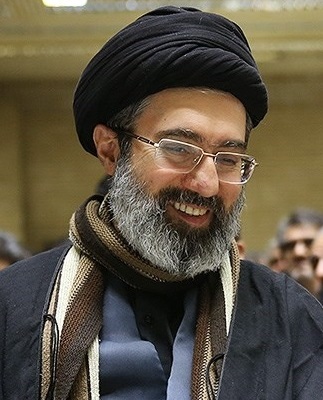
In a landmark and deeply consequential development for Iranian governance and Middle East geopolitics, Mojtaba Hosseini Khamenei has been formally appointed as the third Supreme Leader of the Islamic Republic of Iran. The appointment follows the death of his father, Ayatollah Ali Khamenei, who was killed on February 28 during joint United States–Israeli airstrikes in Tehran amid the ongoing war. Mojtaba Khamenei’s elevation was confirmed on March 8 by Iran’s Assembly of Experts, the clerical body constitutionally tasked with selecting the country’s supreme leader.
The decision, made by a decisive vote of the Assembly’s 88 members, ends a period of collective leadership by an interim council that assumed the responsibilities of the office after the elder Khamenei’s death. The Assembly’s statement urged Iranians, especially religious scholars and academic elites, to unite behind the new leader to safeguard national cohesion at a sensitive historical moment.
Mojtaba Khamenei’s selection marks the first apparent hereditary transmission of supreme leadership since the 1979 Islamic Revolution abolished monarchy and established the current theocratic system. While Iranian political structures have always permitted clerical continuity, the passing of leadership from father to son has introduced unprecedented debates about constitutional norms and the ideological foundations of the republic.
The Assembly of Experts’ vote underscores the influence of Iran’s conservative clerical establishment and the Islamic Revolutionary Guard Corps (IRGC), which has publicly pledged its loyalty to the new Supreme Leader. In its official statement, the IRGC declared its readiness to follow Mojtaba Khamenei’s directives and defend the Islamic Republic in the face of external pressures.
Mojtaba Khamenei, 56, succeeds his father in the midst of the most serious conflict the Islamic Republic has faced in its 47‑year history. Prior to his elevation, he did not hold elected office and was not widely recognized as a senior religious authority in the traditional clerical hierarchy. Despite this, his longstanding influence behind the scenes, particularly through deep ties to the IRGC and conservative political networks, positioned him as a central figure in Iran’s power structure long before the war.
Reactions to the appointment have been sharply polarized. Within Iran, official state media and allied political factions framed the decision as a reaffirmation of revolutionary principles and resistance against foreign interference. The Assembly’s call for unity reflects concerns about internal cohesion amid continuing conflict.
International responses have been sharply critical from Western capitals. Former U.S. President Donald Trump publicly denounced the selection, describing the appointment as “unacceptable” and insisting that Washington should have a role in determining Iran’s leadership. Israeli officials likewise signaled rejection, framing the development as deepening the ideological divide and escalating the war.
Regional responses have been mixed. Allied groups such as Yemen’s Houthi rebels issued statements of support, hailing the appointment as a victory for Iran’s revolutionary forces. Gulf states including Saudi Arabia, the United Arab Emirates and Bahrain have condemned the succession and reiterated warnings against ongoing missile and drone attacks emanating from Iranian‑aligned forces.
Mojtaba Khamenei assumes leadership with Iran fully engaged in conflict with the United States and Israel. The war has already inflicted significant human and material losses, disrupted vital energy corridors such as the Strait of Hormuz and sent global oil prices surging past $100 per barrel. The war’s escalation and the new leadership appointment are likely to intensify scrutiny of Iran’s strategic direction both domestically and internationally.
Analysts caution that his rise to the highest office not only reflects continuity of the old guard but also underscores the consolidation of power among hard‑line elements within the regime. Reports suggest that the IRGC’s backing was instrumental to his elevation, indicating that Iran’s security apparatus will play an even more central role in shaping domestic governance and foreign policy under the new Supreme Leader.
The appointment poses significant questions about the long‑term ideological and constitutional trajectory of the Islamic Republic. Traditionally, the Supreme Leader is expected to be a senior religious jurist with formal scholarly credentials. Mojtaba’s background, while deeply rooted in revolutionary circles and security networks, does not conform fully to the traditional religious hierarchy expected of successive supreme leaders. This has stoked debate among clerics and political observers about future governance norms within Iran.
The global community will be watching closely how Mojtaba Khamenei navigates Iran through ongoing war, regional pressures and internal divisions. His leadership comes at a defining moment for Iran’s political identity and its role in broader Middle East stability.
From breaking news to thought-provoking opinion pieces, our newsletter keeps you informed & engaged.




Lorem ipsum dolor sit amet, consectetur adipiscing elit. Suspendisse varius enim in eros elementum tristique. Duis cursus, mi quis viverra ornare, eros dolor interdum nulla, ut commodo diam libero vitae erat. Aenean faucibus nibh et justo cursus id rutrum lorem imperdiet. Nunc ut sem vitae risus tristique posuere.